Article summary generated by AI — it may contain errors.
Table of contents
Well-planned logistics has a direct impact on delivery predictability and production continuity. In the electronics industry, it involves much more than simply moving a component from the manufacturer to its final destination. Product availability, country of origin, transport method, Incoterms, customs procedures and packaging all influence how a delivery is organized. In the case of displays, this is particularly important, as the logistics model should be aligned with both the production schedule and the requirements of the specific application.
In this article, we answer the most common questions about display logistics – from transport from the Far East and handling at our warehouse to final delivery to the customer’s manufacturing facility.
Another important factor to consider is lead time, i.e. the time required to fulfil an order. It may depend on factors such as product availability, production scheduling and transport. We discuss this topic in more detail in a separate article: Lead time in the electronics industry – what determines display order fulfilment times?
Local warehouse and product availability
A significant part of the display supply chain is linked to the Far East, where many manufacturers of display components and complete modules are based. As a result, the way an order is fulfilled depends largely on where the product is currently available.
The shortest route applies to products stocked in our warehouse in Poland. Selected standard modules are available locally, so there is no need to wait for production or arrange international transport. This can significantly shorten the time required to prepare the order for shipment.
Another scenario is availability in a European warehouse operated by the manufacturer or supplier. The goods still need to be transported to Poland, but the logistics process is shorter and simpler than for shipments from the Far East. In most cases, it also avoids the import procedures required for goods entering the European Union from third countries.
If the product is available neither locally nor in a European warehouse, the process involves additional stages. It may already be stocked at the manufacturer’s warehouse in the Far East or require production of a new batch. Transport to Poland is then arranged, the necessary customs formalities are completed, and the goods are delivered to our warehouse.
Why do products first arrive at our warehouse?
Products imported from the Far East must go through the required customs procedures. We handle these formalities on behalf of the customer, so they do not need to manage the customs clearance process themselves. The documentation includes, among other things, HS (Harmonized System) codes used for the international classification of goods. This information can also be provided to customers for procurement, documentation or audit purposes.
Once customs clearance is complete, the products are delivered to our warehouse, where they are verified before being sent to the customer. This is particularly important for products ordered for the first time, as an additional quality check allows us to confirm compliance before shipment to the final destination.
After verification, we arrange delivery to the address specified by the customer, for example to the manufacturing facility where the devices are assembled.
Transport from the Far East – air, sea or rail?
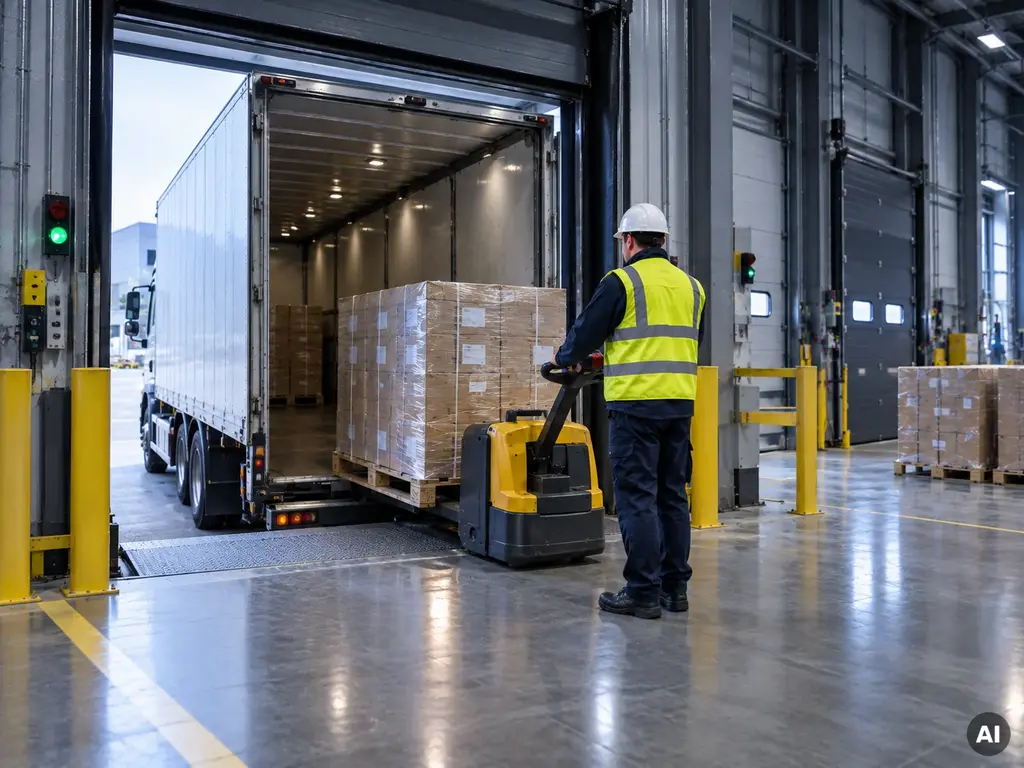
Products from the Far East can reach Europe by several transport modes. We select the most suitable option based on the requirements of each order, including batch size, expected delivery date, freight cost and current route availability. In projects where demand can be planned well in advance, the transport method is often considered as early as the quotation stage. This allows us to choose a solution that balances delivery time and cost from the outset.
Air freight is usually the fastest, but also the most expensive option. We use it mainly for urgent deliveries, smaller batches or when reducing transit time is more important than minimizing cost. It can also be used for rapid stock replenishment. If a product needs to be imported by air, the higher freight cost may also affect its final price.
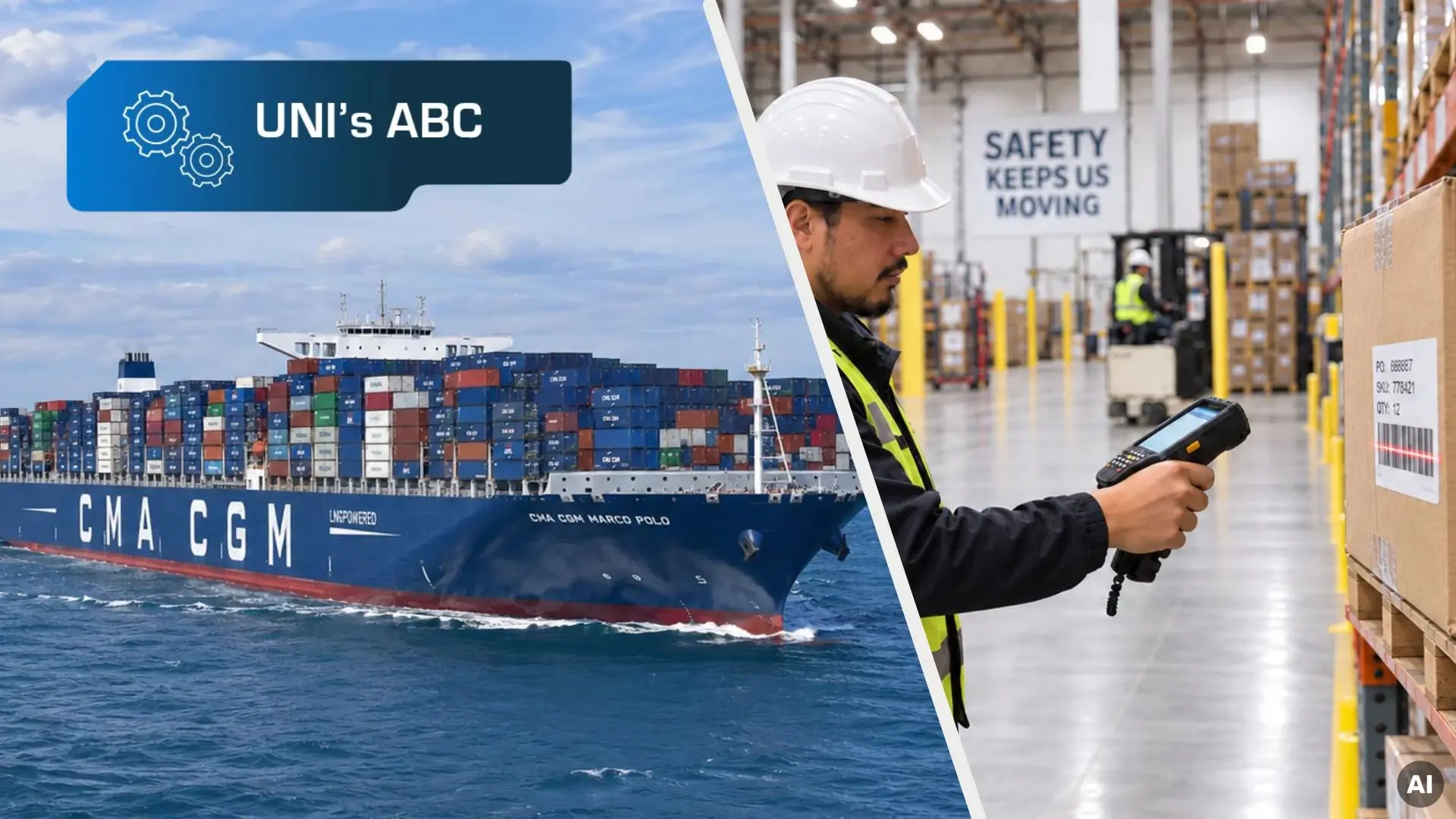
Sea freight is generally the most cost-efficient option for larger volumes, but it also involves the longest transit time. It is therefore particularly suitable for projects where demand can be planned sufficiently far in advance and the longer shipping time can be built into the delivery schedule. Transit times may be affected by port congestion, route availability, changes to shipping routes or additional transshipment operations.
Rail transport offers a middle ground in terms of both time and cost. It can be an alternative to sea freight when a shorter transit time is required but air freight would be economically unjustified. Its availability and reliability, however, depend on the specific route and current logistics and geopolitical conditions.
When selecting the transport method, we consider not only freight cost but also batch size and value, required delivery date, order frequency and the ability to forecast demand in advance. In serial production projects, the goal is not simply to optimize a single shipment, but to establish a transport model that can be reliably integrated into the production schedule.
Depending on the project requirements, different transport modes can also be combined – for example, regular larger-volume shipments can be sent by sea, while air freight can be used for urgent stock replenishment. The final choice is therefore based on the specific requirements of the project, its schedule and the overall cost of delivery.
Direct shipment from the manufacturer – is it worth it?
Customers sometimes ask whether products can be shipped directly from an overseas manufacturer. However, we do not recommend this delivery model. Instead, orders are routed through our warehouse before being sent to the destination specified by the customer.
One of the main reasons is cost. Shipping an individual order directly from the manufacturer can be significantly more expensive than using consolidated transport organized by Unisystem. By combining several shipments into one transport operation, freight costs can be spread across a larger volume. In practice, this often results in a more cost-efficient delivery model.
Direct import would also require the customer to handle customs clearance and bear the associated import processing costs. We work with trusted customs agencies and manage these formalities as part of the delivery process. A customer importing goods independently would need to establish cooperation with a customs agency or provide the necessary authorizations, which means additional paperwork and may extend the overall process.
Another important benefit is the possibility of verifying the product before it is sent to the customer. Products arriving at our warehouse are checked prior to further shipment, which is particularly important for first orders of a given model. This allows potential non-conformities to be identified before the goods reach the customer.
Which Incoterms apply to deliveries?
Incoterms are international trade rules that define how responsibilities, costs and risks are shared between the seller and the buyer when goods are delivered. In our commercial relationship, Unisystem is the seller and the customer is the buyer. The rules specify, among other things, where delivery takes place, when risk is transferred and which party is responsible for arranging each stage of transport.
We refer to Incoterms 2020 – the current version of the rules developed by the International Chamber of Commerce (ICC). It includes 11 rules covering different delivery arrangements. These include, among others:
- EXW (Ex Works) – the seller makes the goods available at its premises or another agreed location, while the buyer is responsible for arranging further transport,
- FCA (Free Carrier) – the seller delivers the goods to a carrier nominated by the buyer at the agreed location,
- CPT (Carriage Paid To) – the seller pays for transport to the agreed destination, while risk transfers to the buyer when the goods are handed over to the carrier,
- CIP (Carriage and Insurance Paid To) – similar to CPT, but with transport insurance also arranged by the seller,
- DAP (Delivered at Place) – the seller arranges transport to the agreed destination, while the buyer is responsible for import formalities,
- DDP (Delivered Duty Paid) – the seller arranges delivery to the agreed destination and is also responsible for import formalities and related duties.
The rules differ mainly in how responsibilities, costs and risk are divided between the seller and the buyer.
Not all of these options are used in our sales model. The standard condition specified in Unisystem’s General Terms and Conditions of Sale is EXW (Ex Works) – Seller’s premises. Unless otherwise agreed, this means that risk transfers to the buyer when the goods are made available for collection at our premises.
The delivery location and any additional terms are specified in the order and order confirmation. If different conditions are agreed between the parties, they take precedence over the provisions of the General Terms and Conditions of Sale.
How are displays protected during transport?
Displays need to be properly protected against mechanical damage as well as risks associated with transport and storage. The packaging method is selected according to the type of product, its dimensions, construction and shipment volume.
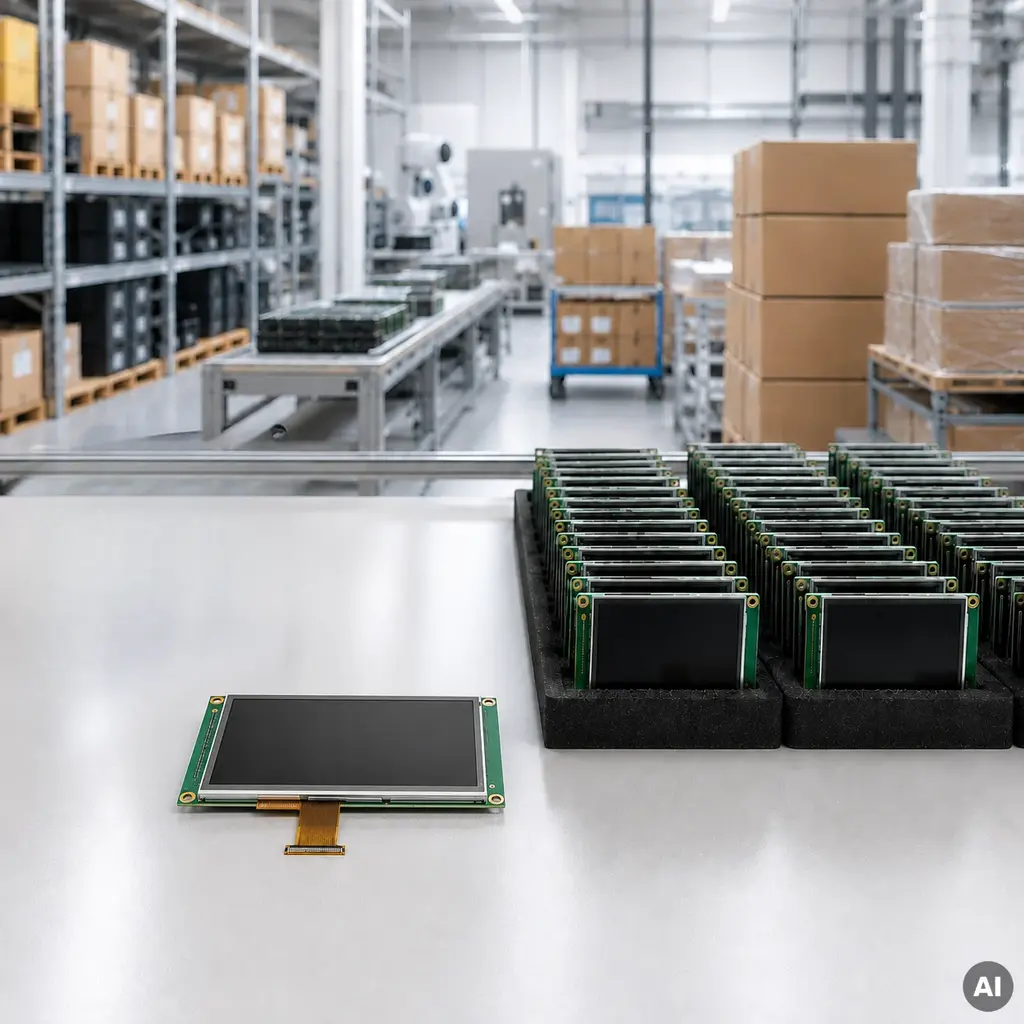
Depending on the product, different types of protection may be used, including:
- transport trays and separators – keep individual modules in place and prevent them from moving or coming into contact with one another during transport,
- foam and cushioning materials – fill empty spaces inside the packaging and help absorb shocks, impacts and external pressure,
- ESD packaging – protects sensitive electronic components against electrostatic discharge,
- protective layers for display or glass surfaces – help prevent scratches, contamination and other surface damage during transport and handling,
- outer cartons – allow multiple products to be packed together safely while providing additional protection against movement and external pressure,
- pallet protection – for larger shipments, products can be secured and stabilized on a pallet to reduce the risk of movement or damage during transport and handling.
Other electronic components may require different packaging methods. Selected parts can, for example, be supplied in tape & reel format, allowing them to be fed directly into automated assembly processes.
Appropriate packaging is important not only during transport. It also helps ensure safe storage and supports the efficient handling of components in the customer’s manufacturing process.
Markings, labels and customer part numbers
Logistics also includes clear and accurate product identification. This is particularly important in serial production projects, where deliveries may be received at the customer’s warehouse or sent directly to an EMS facility and need to be correctly matched to the relevant project.
Products are labelled in accordance with the applicable part-numbering policy (P/N). Depending on the project requirements, we can also use customer-specific part numbers, barcodes, QR codes and other required markings.
A properly prepared label makes it easier to identify and track the product throughout the logistics process – from goods receipt and storage to its use on the production line.
Demand planning and continuity of supply
In serial production projects, logistics begins well before transport is arranged. A regularly updated demand forecast helps plan future batches, secure components and production capacity, and prepare for changes in volume, seasonal demand or planned production scale-up. This is particularly important in long-term projects, where maintaining continuity of supply requires planning well in advance.
Buffer orders
One way to support continuity of supply is through buffer orders. A specified quantity of product is secured in advance and can then be delivered according to an agreed schedule. This makes subsequent deliveries less dependent on current production lead times, while allowing the customer to receive the contracted volume in stages rather than all at once.
The buffer size should be aligned with actual demand and the production schedule. Too little stock may not provide sufficient protection against shortages, while too much can lead to unnecessary storage costs and tied-up capital.
We discuss this topic in more detail in a separate article: Blanket orders in the electronics industry – how to secure component availability and streamline deliveries.
EOL (End of Life) for displays
In long-term projects, it is equally important to monitor the lifecycle of the display and its key components. If a manufacturer announces the end of production of a particular model or one of the components used in it, the existing sourcing strategy may need to be adjusted.
Depending on the situation, this may involve securing the required volume in advance, placing a Last Time Buy order, selecting an alternative product or redesigning the device. This is particularly important for displays, as replacing one model with another may require mechanical, electrical or software changes.
We discuss this topic in more detail in a separate article: What Is End of Life (EOL)? Definition, Risks and How to Prepare in Electronics Projects
How should logistics be planned in a serial production project?
There is no single logistics model that works for every project. The right approach will depend on whether the product is available locally, supplied regularly from the Far East or manufactured in a customized configuration.
When planning logistics, it is worth considering:
- product availability and country of origin,
- expected volumes and delivery frequency,
- lead time,
- transport method and transit time,
- final delivery location,
- agreed Incoterms,
- packaging and labelling requirements,
- expected changes in demand,
- the need to maintain stock or use buffer orders,
- expected product lifecycle.
The earlier these factors are defined, the easier it is to plan product flow and align the delivery model with the production schedule.
Planning display deliveries for a serial production project? Contact us – we will define a delivery model tailored to your expected volumes, schedule and delivery requirements.