Consumer Electronics & Appliances
Displays for consumer electronics and home appliances
Washing machines, ovens, coffee makers, audio-video gear and wearables: in consumer products the display is part of the design and a noticeable part of the bill of materials. We help you find the technology and format that fit the product, the price point and the production volume.
- the lowest-cost technology that fits the design
- Segment LCD to TFTthe lowest-cost technology that fits the design
- formats for distinctive products
- Round · square · bar-typeformats for distinctive products
- segment displays designed to your layout
- Custom LCMsegment displays designed to your layout
Why it matters
Design, cost and volume
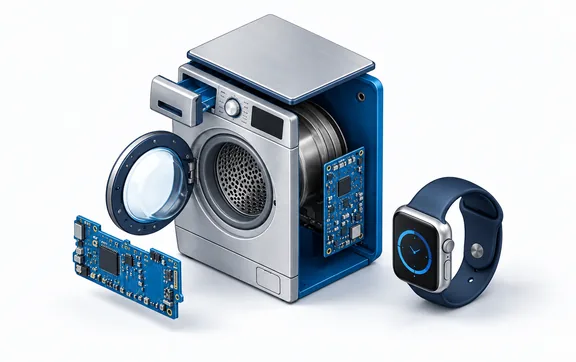
Home appliances and consumer electronics are produced in large volumes and judged by how they look and feel. The display has to fit a design, whether a round window on a washing machine, a narrow strip on a coffee maker or a tiny screen on a wearable, and it has to do so at a unit cost that works for mass production.
Conditions at home are predictable, which is good news: standard panels with universal parameters often do the job, and around 250 cd/m² is usually enough indoors. The effort goes into the details users notice: crisp contrast, responsive touch behind a glossy glass front and a smooth user interface.
Applications
Consumer applications we support
Typical products and their requirements. Each link opens our display configurator with matching criteria already set.
Large appliances
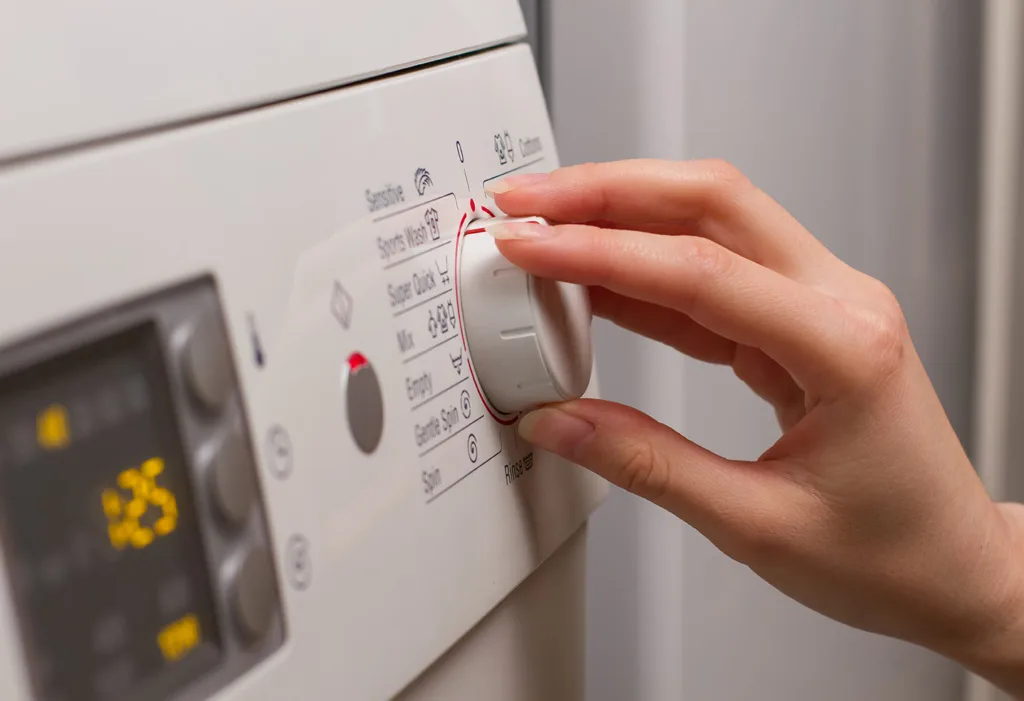
Washing machines, dryers, ovens, hobs and refrigerators: TFT or segment displays behind glass, often combined with touch or a rotary knob.
- 3–15″
- TFT or segment LCD
- PCAP or buttons
- printed glass
Small appliances
Coffee makers, kitchen robots and air purifiers: compact OLED, LCM or small TFT displays, including bar-type formats for narrow panels.
- 3–8″
- OLED, LCM or TFT
- bar-type formats
- cost-optimized
Audio and video equipment
Amplifiers, receivers and speakers: monochrome OLED or small color TFTs for status and menus, with deep blacks that look premium.
- up to 8″
- OLED or TFT
- deep blacks
- slim modules
Wearables
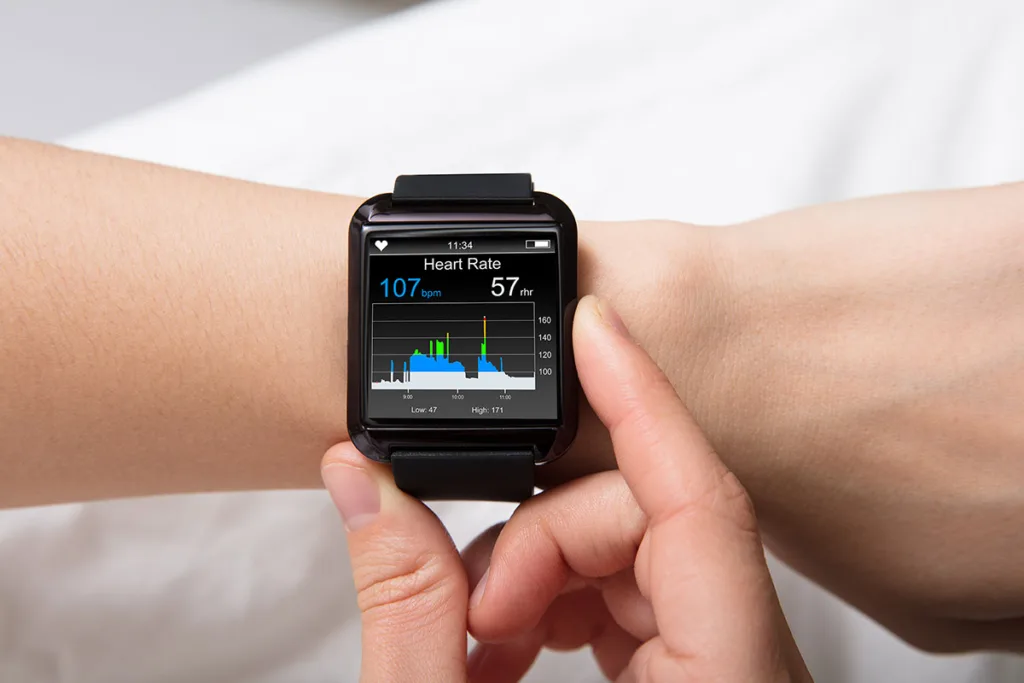
Smartwatches, fitness bands and trackers: small OLED or TFT displays under 3″, low power and readable outdoors.
- under 3″
- OLED or TFT
- round or square
- low power
Requirements
What consumer products ask of a display
Four trade-offs that shape almost every consumer project.
Industrial design
Round, square and stretched formats, and cover glass with printed frames and icons that stays black until the display lights up.
Unit cost at volume
The choice between segment LCD, monochrome OLED and TFT is often a cost decision. We help find the lowest-cost technology that still meets the design.
Viewing angle and readability
Users look at appliances from above or below, so a 12 or 6 o'clock viewing direction can be enough and costs less than a full-viewing panel.
Power and standby
Always-on displays must keep standby consumption low. Reflective LCDs, OLEDs and dimmable backlights help meet energy requirements.
Specification guide
How to specify a display for a consumer product
Starting values by product type.
| Parameter | Typical requirement | Why it matters |
|---|---|---|
| Technology | Segment or mono LCM, mono OLED, TFT, e-paper | Cost versus content |
| Size | Under 3″ for wearables · 1–4″ for small appliances · 3.5–10″ for white goods | Typical product formats |
| Brightness | Around 250 cd/m² indoors · 500+ cd/m² for wearables used outdoors | Home lighting is predictable |
| Viewing direction | 6 or 12 o'clock for fixed viewing; full for wearables | Cost versus readability |
| Touch | PCAP behind glass, or buttons and knobs through openings in the glass | The feel of the product |
| Format | Standard, bar-type, round or square | Fits the industrial design |
| Interface | SPI, I²C, MCU, RGB or MIPI | Matches consumer microcontrollers and SoCs |
What we adapt
What we adapt for consumer projects
From standard modules to parts designed around your product.
Custom segment LCDs
Segment displays designed to your layout of icons and digits, produced by our partner Winstar.
Decorative cover glass
Printed frames and icons in your colors, openings for knobs and buttons, and a glossy or matte finish.
Touch integration
Capacitive touch behind the glass front, tuned to the glass thickness and your enclosure.
Bar-type and special formats
Stretched, round and square panels for narrow fronts and wearables.
Controllers and interfaces
Modules with the interface your microcontroller supports, or smart displays that draw the UI themselves.
From our catalog
Displays for consumer products from our catalog
A selection matched to the applications above, updated automatically with our catalog.
 White-goods control panels
Unisystem
UST070HSLNCE00
Unisystem 7" 1024x600 TFT LCD, LVDS, capacitive touch, rectangular cover glass without tape
- 7″
- 1900 cd/m²
- -20…+70 °C
- PCAP touch
 White-goods control panels
Winstar
WF43GSIAEDNGD
Winstar 4.3" 480x272 LCD-TFT display
- 4.3″
- 800 cd/m²
- -20…+70 °C
- PCAP touch
 Bar-type displays
Winstar
WF0675ASYAB6LNN0
Winstar 6.75" 480x1280 LCD-TFT display
- 6.75″
- 1200 cd/m²
- -20…+70 °C
- 480×1280
 Bar-type displays
Winstar
WF70C9SYAB4MNC10
Winstar 7" 280x1424 LCD-TFT display
- 7″
- 800 cd/m²
- -20…+70 °C
- PCAP touch
 Small appliances & audio-video gear
Winstar
WEG010016AGPP5N00100
Winstar Longlife OLED graphic display module
- 2.4″
- -40…+80 °C
- 100×16
 Small appliances & audio-video gear
Winstar
WEF012864GLAP3N00F00
Winstar OLED graphic display module
- 2.42″
- -40…+80 °C
- 128×64
 Wearables
Winstar
WEA012864LLPP3N00000
Winstar Longlife OLED graphic display module
- 1.28″
- -40…+80 °C
- 128×64
 Wearables
Winstar
WEA012840A
Graphic OLED display from Winstar
- 1.3″
- -40…+80 °C
- 128×40
FAQ
Frequently asked questions
Which display is the cheapest option for a home appliance?
For fixed icons and digits, a custom segment LCD is usually the lowest-cost option in volume, with a very long life. When the interface needs graphics or menus, small TFT or monochrome OLED displays are the next step.
Can you make a custom-shaped display?
Custom segment LCDs can be designed around your layout of icons and digits. For TFTs, our partners offer round, square and stretched panels, and the cover glass can be cut and printed to match your design.
Is OLED a good choice for audio equipment?
Monochrome OLEDs are popular in audio gear: a pure black background, crisp characters and wide viewing angles give a premium look, and without a backlight the modules are very thin.
What do I need for a wearable display?
Small size and low power: OLED or low-power TFT panels under 2″, readable outdoors and often round or square. Touch and cover glass have to fit a very thin stack.
Knowledge
Further reading
Contact
Designing a consumer product?
Share the design constraints and target volume, and a display engineer will propose the technology and format that fit, with pricing and lead time. We typically respond within 1 business day.
What helps us answer quickly:
- Product type and design constraints
- Content: icons, digits, graphics or video
- Screen size and shape
- Touch, buttons or knobs
- Interface and microcontroller
- Target volume and price point
A rough idea is enough to start. If you do not know some of the values yet, leave them out and we will help you define them.