Article summary generated by AI — it may contain errors.
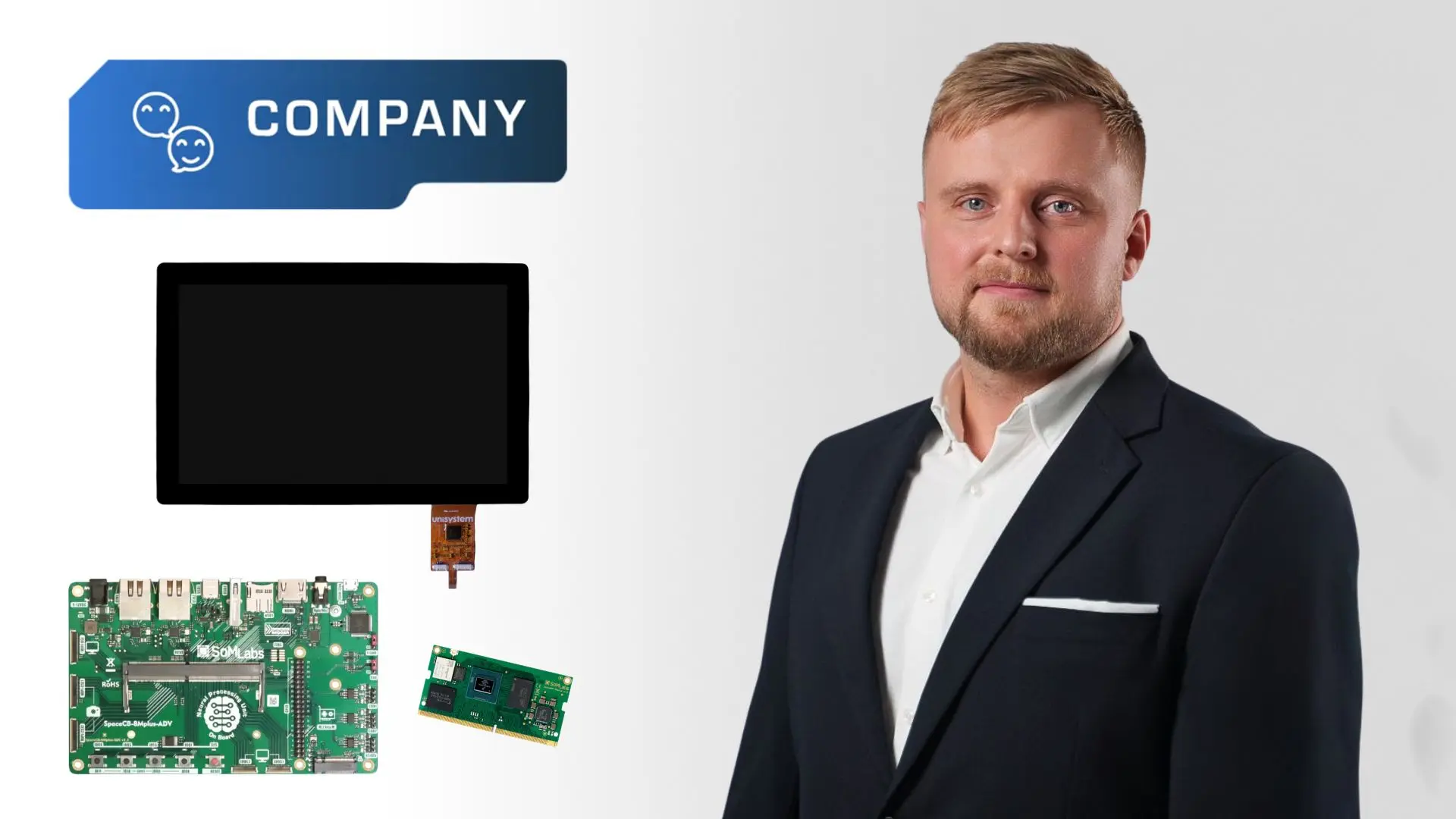
Smart displays can simplify HMI development and shorten the time needed to bring a device to market. Where do they work best, when are they cost-effective, and what makes them difficult to replace with alternatives? Jacek Marcinkowski, CTO at Unisystem, addresses these questions in a mini-interview published in the November issue of “Elektronik”, an electronics industry magazine.
Is it possible to define the range of applications for smart displays?
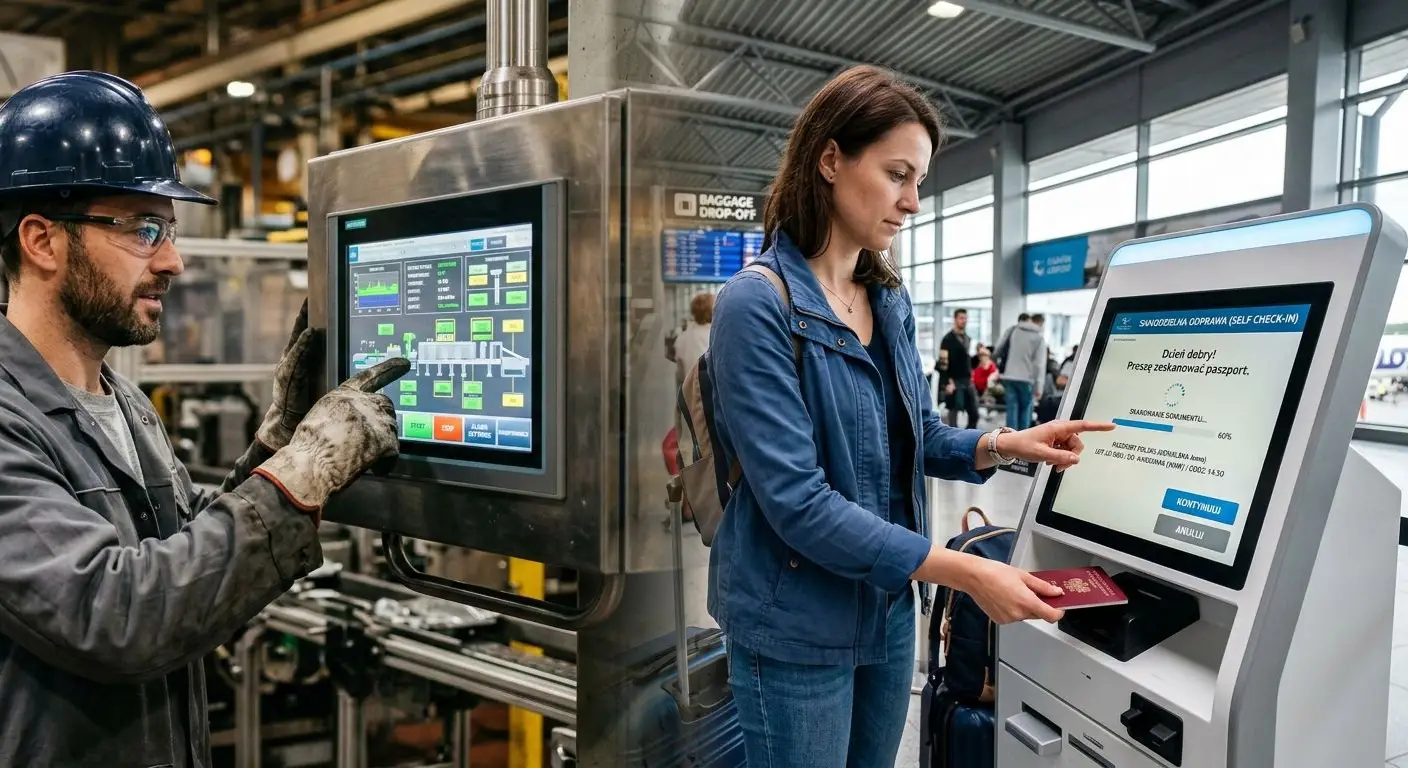
Jacek Marcinkowski, CTO at Unisystem: We can identify typical applications, but smart displays are not limited to any single category of devices. They are particularly useful when the goal is to simplify user interface development, reduce the workload of the host controller or, in some cases, take over its functions entirely. They are used in industrial automation, measurement equipment, medical and laboratory instruments, and control systems.
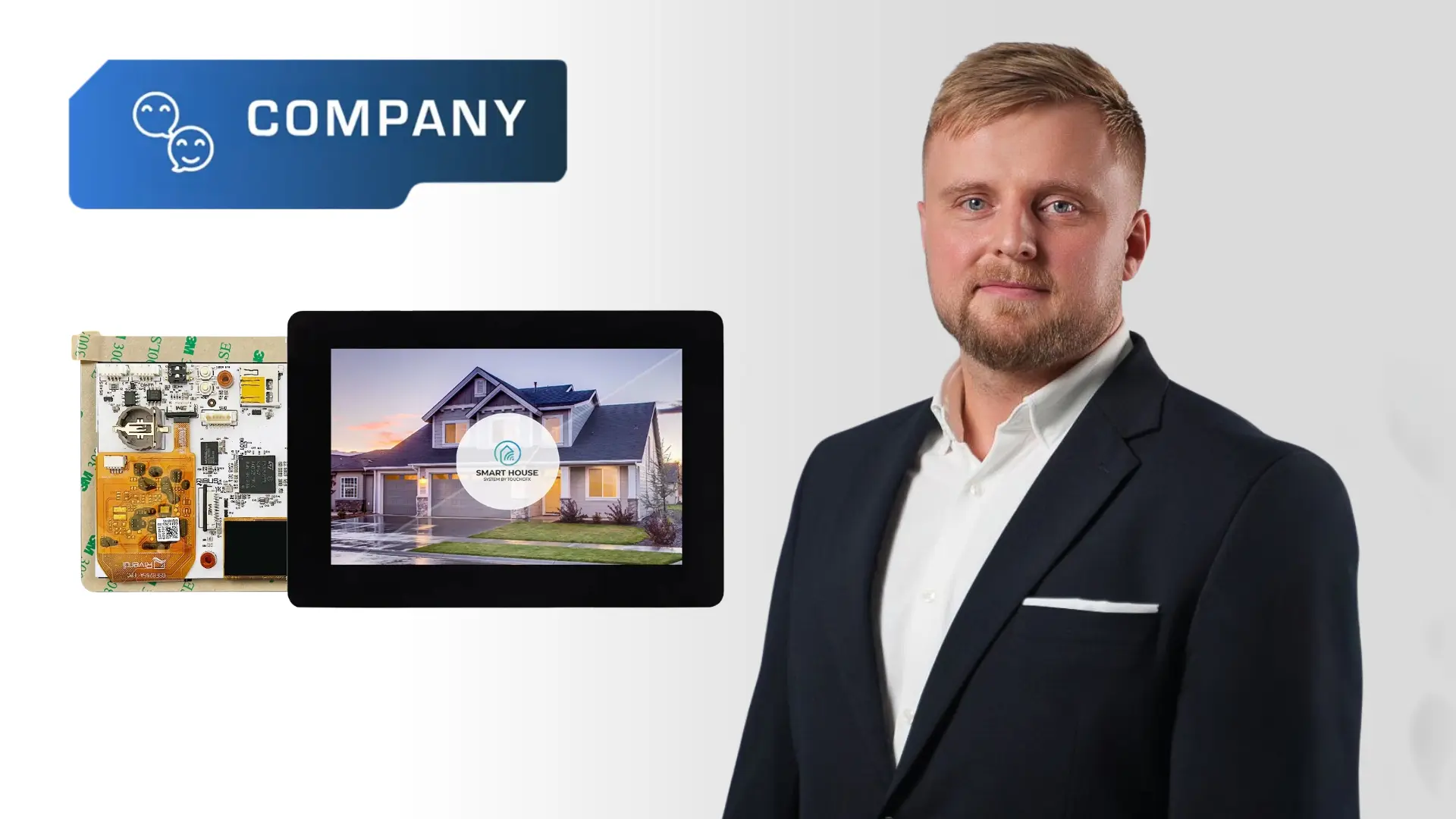
Much depends on the module’s level of intelligence. Displays equipped with a graphics controller handle image generation, while modules with their own GUI development environment can also manage screens and events. More advanced HMI platforms can execute part of the application logic. One example is the Riverdi displays with STM32 microcontrollers available in our portfolio. These modules can run both the user interface and control software directly on the display module. In suitable applications, this eliminates the need for a separate host controller.
What is the market potential of smart displays, and how are they perceived by the industry?
I see considerable market potential for smart displays, particularly in projects where shorter development times and reduced engineering effort are priorities. From a device manufacturer’s perspective, their main advantage is the ability to simplify hardware and software development. Using a ready-made module with graphics capabilities and, depending on its design, access to low-level interfaces can reduce the need to develop a GUI from scratch, simplify the device architecture and accelerate time to market.
Cost-effectiveness is another important consideration. Although a smart display typically costs more than a standard TFT LCD module, it can reduce the overall costs of hardware design, software development and integration. This is particularly relevant for low- and medium-volume production, where development costs are spread across fewer units. At higher production volumes, developing a custom controller board may prove more economical. However, there is no universal production threshold beyond which smart displays become uneconomical. The decision depends on the total system cost, application requirements and expected product lifecycle.
Could the lack of a common functional standard and vendor lock-in hinder the wider adoption of smart displays?
This is a significant challenge, particularly for manufacturers developing devices intended to remain in production and operation for many years. Modules from different suppliers may have similar screen sizes, resolutions and even the same STM32 microcontroller, yet still not be interchangeable. They may differ in their interfaces and communication protocols, pinouts, connector types or input voltage ranges. Switching suppliers may therefore require modifications to the hardware, GUI and software.
When selecting a module, it is important to assess the availability of technical documentation, manufacturer support, firmware update options and long-term product availability. The risk of vendor lock-in is real, but it does not necessarily outweigh the benefits. If a module meets the application’s requirements, it can significantly reduce development time and costs. The key is to make an informed design decision rather than simply choosing a popular hardware platform.
Considering a smart display for your project? Contact our team – we’ll help you select the right solution for your application’s requirements.