Article summary generated by AI — it may contain errors.
Table of contents
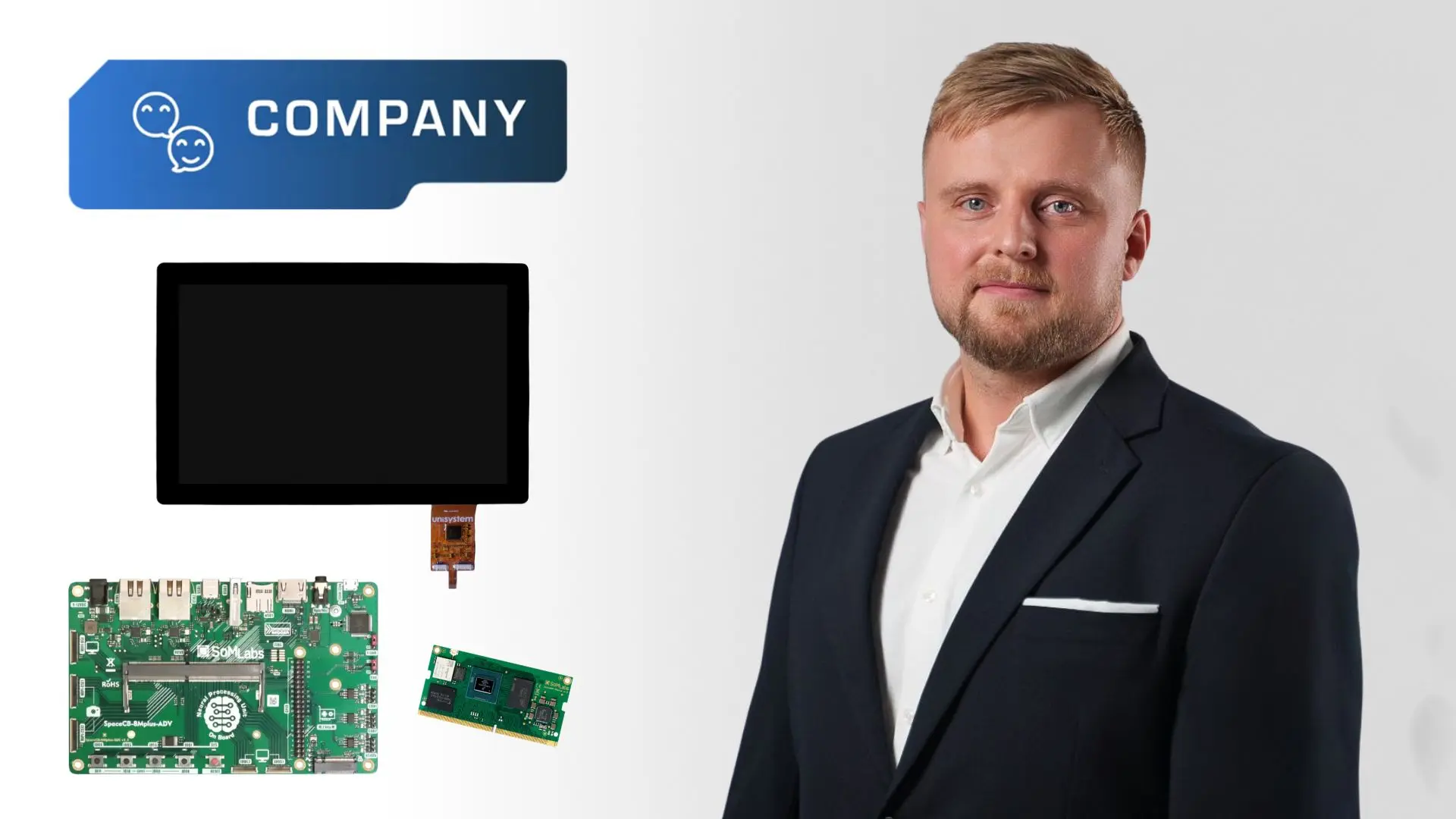
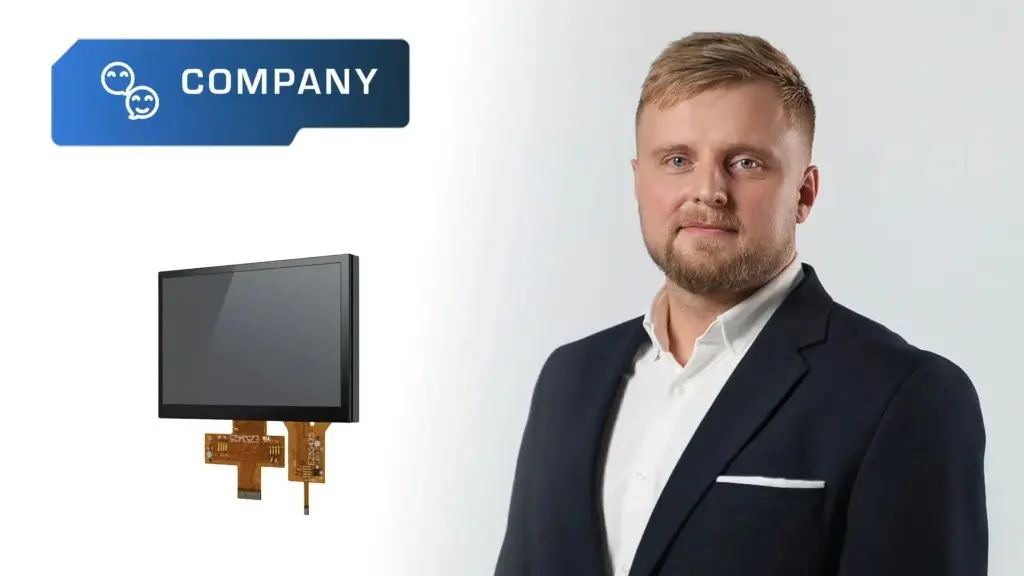
Unisystem is launching its own industrial LCD-TFTs in three product lines: Lite, Core and Pro. The modules have been developed based on 30 years of experience in supplying displays and delivering customized solutions for industrial applications. Jacek Marcinkowski, CTO at Unisystem, discusses their technical specifications, indoor and outdoor use cases, and the competitive advantages of the new product family.
Why did you decide to introduce new product lines?
Jacek Marcinkowski, CTO at Unisystem: It is a natural result of our long-standing presence in the display market and the number of projects we have seen from the inside. Over the years, we have gained experience that helped us identify what customers actually need and which elements of solutions offered by other manufacturers most often require modification to meet the requirements of the end device. Across many projects, we have observed recurring challenges – from durability and functional stability to issues that only become visible during validation or testing. Based on this experience, we have built a practical map of market needs.
Unisystem has also been delivering customized solutions for years, so we understand very well what it takes to adapt a module to a specific application. Now we are taking this one step further by expanding our portfolio with proprietary products designed to meet most of the requirements we have encountered in industrial projects so far. Customers will receive a ready-to-integrate solution that can be implemented in the end device by bonding or mounting it in a dedicated space.
This is our response to customer needs not only from a technological perspective, but also from a business one. A ready-made industrial module means shorter implementation time, lower project risk and predictable parameters, for example at the testing stage. In practice, this means faster time-to-market, lower costs related to late-stage modifications, and greater stability throughout the entire product lifecycle.
What exactly are these products?
Unisystem’s proprietary solutions have already been appearing on the market for some time. One example is the capacitive touch button, which was added to our offer in 2025. It is an industrial-grade solution designed for operation in demanding environmental conditions. Thanks to its design, it can be used both in new projects and in modernized devices, effectively replacing mechanical solutions – especially wherever durability, precision and resistance to mechanical degradation are important.
As for the latest products, they are three lines of industrial LCD-TFTs, also available in versions with a capacitive touch panel. Depending on the model, the modules are offered in popular sizes of 7”, 10.1”, 12.1” and 15.6”, which correspond to the most commonly used formats in industrial devices. The new lines are introduced under the names Lite, Core and Pro.
When developing them, we focused on three key features: quality, durability and variety. There is also one more value that is especially important in industrial projects: availability.
Since we are talking about three display lines – Lite, Core and Pro – let’s start with what they have in common. What features are shared across the entire product family?
Although each line is designed for different application needs, all of them have been developed according to a consistent engineering concept.
In addition to the sizes mentioned earlier, all lines share the same operating temperature range. The modules are designed to operate from −20 to +70°C. Depending on the model, RGB, LVDS and MIPI communication interfaces are available. To simplify the design process, selected LCD-TFT control elements have also been integrated directly into the module.
Long-term product availability is another standard feature, which is critical in industrial projects from the perspective of the device lifecycle. In the case of our solutions, availability is planned for up to 10 years.
It is also worth emphasizing that all touch-panel variants across the three lines use optical bonding technology, which means the components are permanently joined with a transparent optical adhesive. By eliminating the air gap between layers, optical bonding improves the module’s optical performance and reduces light reflections. This results in excellent image readability, especially in environments with intense lighting. The technology also increases the mechanical integrity of the entire structure, improving resistance to shocks, vibrations and point loads, while reducing the risk of contaminants entering the module.
So what differentiates the individual lines – Lite, Core and Pro? Where does this division come from?
The division is based primarily on the level of application requirements. We designed the entire display family so that customers can select a module that fits the specific operating conditions of their application – from devices used in stable indoor environments to systems intended for demanding conditions, including outdoor use.
Unisystem Lite is intended for indoor applications operating in predictable, stable conditions – with moderate lighting and controlled temperature. The modules are based on high-quality standard components that fully meet the requirements of such environments. An MTBF of at least 50,000 hours makes the line well suited to devices intended for regular, long-term operation under typical indoor conditions.
Unisystem Core was designed for typical industrial applications. In this line, we use industrial-grade components suitable for stable continuous operation. Core can be seen as the industrial “default” – a solution for applications where stronger lighting, electromagnetic interference or higher operational loads may occur. In this class, we assume an MTBF of up to 100,000 hours, ensuring many years of stable device operation.
Unisystem Pro was developed for the most demanding environmental conditions, primarily outdoor applications. This line offers brightness of 2,000 cd/m² for the display itself and 1,700 cd/m² for modules with touch panels, ensuring readability even in direct sunlight. In addition to industrial-grade components, the modules use a UV-protective coating and 4 mm protective glass to increase mechanical durability. The MTBF is also 100,000 hours, enabling reliable continuous operation in 24/7 mode.
You mentioned that variants with capacitive touch panels will also be available. I am emphasizing this for a reason – capacitive technology is sometimes perceived as problematic in industrial environments, where electromagnetic interference and various types of contamination may occur, and glove operation is often required. How do you address these challenges?
Indeed, using capacitive technology in industrial environments requires a deliberate design approach to ensure predictable touch performance under real operating conditions.
In this context, proper calibration of the touch controller is crucial – meaning precise adjustment of parameters for operation in difficult environmental conditions. Outdoor devices are a good example of the most demanding scenarios. The choice of a controller with broad configuration capabilities is equally important. Depending on the product line, we use different solutions: the Lite line uses a controller from Goodix, while Core and Pro are based on controllers from ILITEK. ILITEK solutions offer broader parameter configuration options, allowing our engineering team to fine-tune system performance to the specifics of a given application and its operating conditions.
Proper configuration helps reduce phenomena such as so-called ghost touch, meaning unintended touch responses caused by conductive substances, for example water on the screen surface. Features such as frequency hopping increase resistance to interference generated by other components of the device. At the same time, proper calibration enables stable operation with gloves, for example latex or nitrile gloves, which is standard in medical and laboratory environments.
Our modules are therefore not a “universal compromise”, but solutions designed for stable operation in demanding conditions. We also offer an individual calibration service, which allows the module to be precisely adapted to specific requirements, including the detection or rejection of selected signals.
What makes these products stand out on the market – realistically, from the customer’s perspective?
I would once again refer to our experience, because that is the starting point. We know the problems that arise in display-related projects because for years we have supported customers in module integration, adapted solutions to the requirements of specific applications, selected appropriate components and modified designs to ensure stable and predictable device operation. This experience is exactly what we are now transferring into our own product family.
A good example is electromagnetic compatibility. In many projects, EMC is a real challenge, and the display can often significantly affect the level of emitted interference. Being aware of this, already at the design stage we pay particular attention to solutions that help reduce the risk of exceeding limits – before the device reaches testing and validation.
Another important differentiator is long-term stability, which is often missing in standard market solutions. We understand this as guaranteed product availability over many years – in our case, even for a full decade. In industrial projects, this is not a “nice to have”, but a real condition for entering a project and one of the key factors reducing risk throughout the entire device lifecycle.
Where can these products be used in practice? Let’s look at a few specific application examples.
Of course. Application examples are the right point of reference, because this is where the logic behind the Lite, Core and Pro division becomes clear.
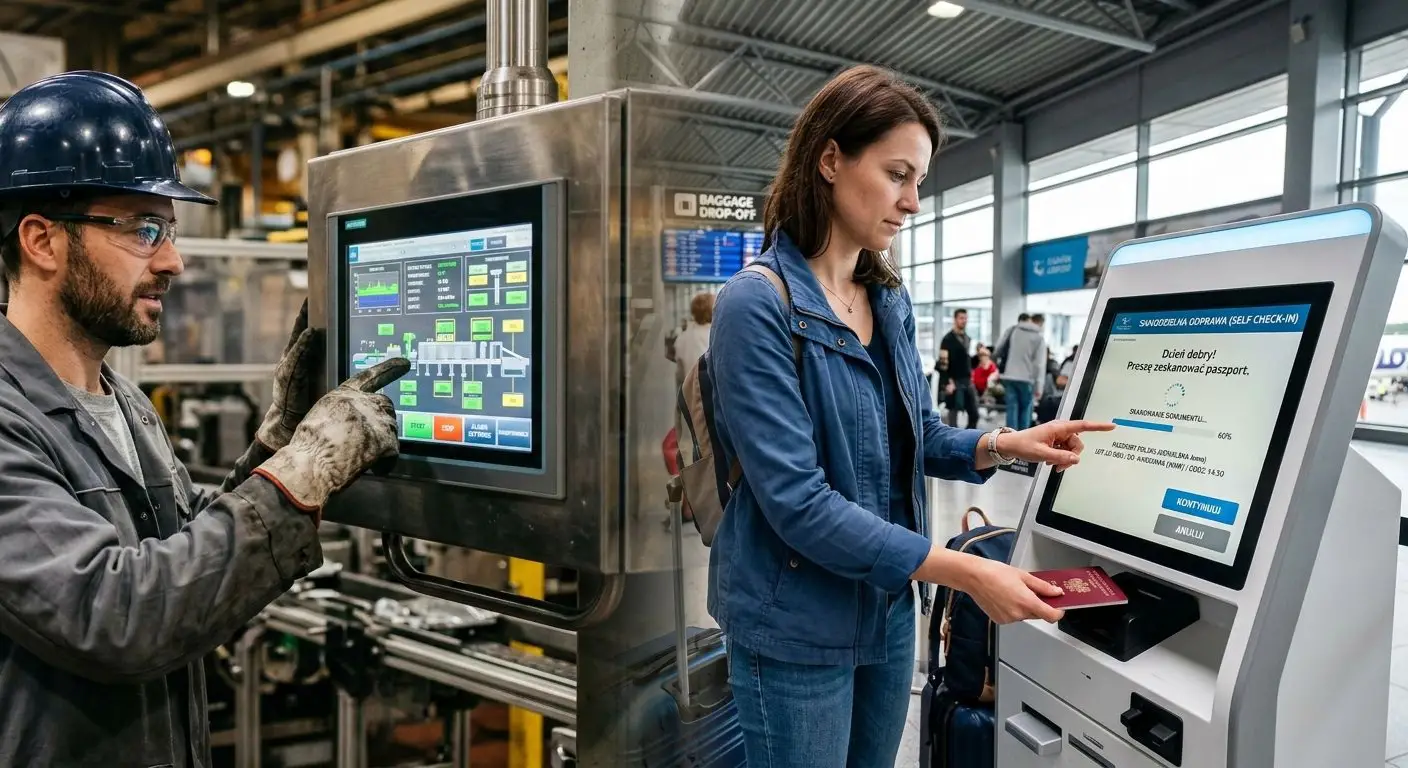
Unisystem Lite works best in indoor applications, in predictable conditions where stable operation is essential, but a heavy-duty specification is not required. A typical example would be operator panels used in building automation.
Unisystem Core is the line we see as the industrial standard for a broad range of indoor implementations. These are devices operating in environments where electromagnetic interference, operational loads or intense lighting may occur, including continuous operation. One example would be professional medical devices – applications in which reliability is not an added value, but an absolute standard. In this context, the ability to operate the screen with gloves becomes particularly important. Medical personnel use gloves every day, so the touch panel must respond precisely and without delay. With proper calibration, the module remains fully responsive, so users do not need to apply extra pressure or repeat commands. This directly improves comfort and safety at work.
Unisystem Pro has been designed for outdoor applications, where the device must operate reliably despite numerous environmental factors that could affect its performance. It is an optimal choice for devices used in public spaces, such as ticket machines, parking meters or outdoor parcel lockers.
When can customers expect the products to be available?
We expect the products to be available around mid-2026.
Stay up to date with news from Unisystem
Follow our channels to be the first to learn about product launches and market availability.
- Sign up for our newsletter.
- Join the Unisystem community on LinkedIn.
- Subscribe to our YouTube channel.
Have questions? Contact us.